PDF Toolkit - Reader
- 4.5
- Rating
- 500.00K
- Installs
- Free
- Price
 Analysis by App-foxy
When a document arrives in the wrong format, the problem is rarely the file itself. It is the handoff: a PDF that needs reading on a phone, a document that must be converted before someone else can open it, or a file that needs to move from an inbox to a usable format without sending me back to a desktop. That is the situation where I found PDF Toolkit - Reader most useful. It is a free productivity app from Limetech, focused on reading documents and converting file formats rather than trying to become an all-purpose office suite.
My first impression was that its appeal is practical rather than flashy. The app is aimed at the small moments when I need to deal with a document immediately. It is available for everyone, works on devices running Android 7.0 or later, and the current version is 1.0.4. Those details make it accessible to people using older phones, although the experience will still depend on how comfortably that device handles document viewing.
With a 4.6 average from around 1.7 thousand ratings and more than 100 thousand installs, it has already attracted a meaningful audience for a relatively focused tool. I would not choose it because of those figures alone, but they do suggest that the basic idea is landing with people who want a straightforward document utility. The important question is whether it fits the way you actually receive, inspect, and pass along files.
You May Also Like

 Blood Strike: 2.5 Anniversary
Blood Strike’s Loadouts Turn Every Drop Into a Tactical Gamble
A close look at Blood Strike’s custom loadouts: how fast access to signature weapons reshapes its battle royale rhythm, rewards preparation, and narrows the gap between fights.

 Pandora - Music & Podcasts
Pandora’s Music Is Easy to Start, but Harder to Recover
Pandora’s strength is its low-effort path from a seed to a station. Its weak spot is how much confidence it asks you to place in connection, setup, and quiet recovery.

 8 Ball Pool
 Is Built on Rivalries, Rematches, and Routine
A close look at the rivalries, rematches, shared routines, and unanswered safety questions that turn a quick pool match into a persistent mobile community.

 Samsung Music
’s Quiet Strength Is Playing What You Already Own
Its reach comes less from spectacle than from dependable access to a personal library. That simplicity is both the app’s strongest retention engine and its ceiling.

 AccuWeather: Weather Radar
AccuWeather Review: A Quick, Clear Forecast for Everyday Decisions
For everyday plans, the best forecast is the one you can understand quickly. AccuWeather makes rain timing, radar, and local conditions easy to act on, with a few trade-offs.

 Hill Climb Racing
Why Hill Climb Racing Still Turns Crashes Into One More Run
A tiny car, a bumpy hill and one more upgrade: Hill Climb Racing keeps resurfacing because its simple chaos makes every near-miss feel personal.
More From Our News Desk
View All News


From an incoming file to a usable document
I find that the most useful document workflows begin with a clear idea of who needs the file next, not just which button to tap. In this section, I look at how to keep the original, a converted copy, and the intended recipient straight when a document moves between people. That small bit of coordination matters even more when a phone is shared, which leads naturally to setting sensible boundaries around access.
Starting with the file you already have
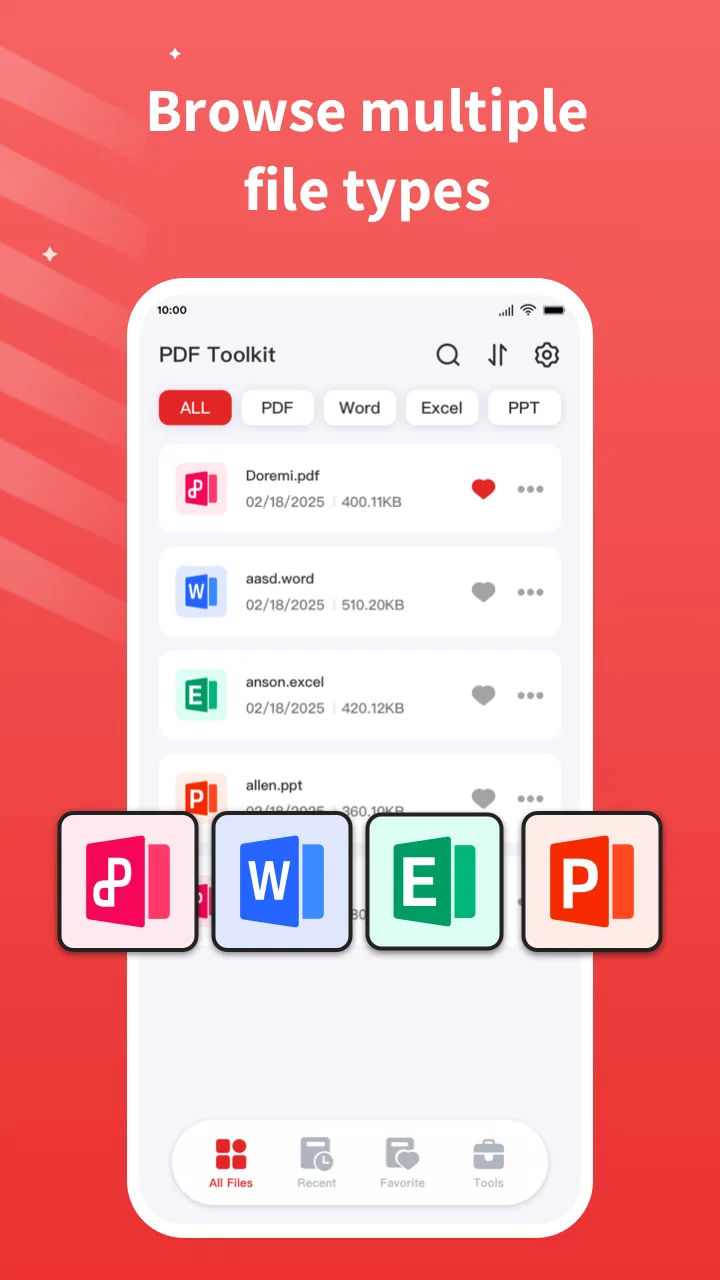
The most realistic way to use this app is to begin outside the app. Imagine receiving a PDF in a message while travelling. You do not need to edit the text, build a presentation, or manage a large archive. You simply need to open the document, understand what it contains, and possibly turn it into another format before forwarding it to a colleague.
That starting condition matters because it separates PDF Toolkit - Reader from heavier office applications. A full office suite can be useful when I need to create or revise content, but it often feels excessive for a quick document check. This app makes more sense when the file is already made and my job is to read it or prepare it for the next person.
I also like this approach for short administrative tasks. A school form, a travel confirmation, a work instruction, or a receipt can all begin as a PDF even when the recipient would prefer a different file type. Instead of treating the format as the end of the process, the app treats it as something I can work around.
Reading before converting
I recommend reading the source document before converting it. That sounds obvious, but it is an easy step to skip when I am in a hurry. A conversion can change the way text, spacing, page breaks, or visual elements appear. Checking the original first gives me a reference point and helps me decide whether conversion is appropriate at all.
This is where the reader side of the app earns its place. I can use it as a first inspection point rather than immediately opening a conversion tool. For a simple text-heavy document, the workflow is uncomplicated: open the file, scan the pages, identify the relevant information, and decide what should happen next.
For a document with complicated layouts, I would be more cautious. A PDF may contain tables, forms, columns, illustrations, or carefully positioned text. Reading it in its original form is usually safer than assuming another format will preserve every visual detail. My practical tip is to convert only when the recipient needs to edit, search, or reuse the content in a way the original PDF does not support.
Choosing conversion as a handoff, not an endpoint
The conversion step is most valuable when it solves a specific handoff problem. For example, a person may need an editable version of a document, while another person only needs the original for reference. In that case, I would keep the PDF as the source and create a converted copy for editing. That simple distinction prevents the converted file from replacing the document that preserves the original appearance.
This is one of the less obvious habits that makes a document toolkit more useful: treat conversion as a branch in the workflow. Do not overwrite the source mentally or operationally. Keep track of which file is the original and which one is intended for modification. Even without turning the app into a document-management system, that discipline reduces confusion when several versions start moving between people.
The app is also better suited to quick, purposeful conversions than to a large production pipeline. If I had to process a substantial collection of files with strict naming rules, repeatable settings, or detailed quality checks, I would look for a desktop converter or a more specialized document system. On a phone, the advantage is convenience; the trade-off is that I have less room to inspect every detail.
Passing the result to the next person
After reading or converting, the next challenge is the handoff. A file is only useful if I can identify the right version and send it to the person who needs it. This is where I would slow down and check the resulting document before sharing it. Open the output, scan the beginning and end, and look for obvious layout problems or missing content.
That extra check is especially important when the file will be used for something consequential, such as a form submission or a work record. A converted document can look acceptable at first glance while still having a misplaced page break or an awkwardly handled table. The app can help me get from one format to another, but it does not remove the responsibility of checking the outcome.
My preferred mobile workflow is therefore simple: retain the original, create the converted copy, inspect the copy, and only then pass it along. This takes a little longer than converting and immediately sharing, but it is a more reliable handoff. It also makes it easier to explain to another person which file they should open or edit.
A realistic everyday example
Suppose I am sent a PDF schedule for a community event. I open it in the app while away from my computer and read the dates, locations, and instructions. Later, an organiser asks for a format that can be adjusted. I use the conversion function to prepare a working copy, then inspect that copy rather than assuming it matches the original perfectly.
If the converted result keeps the important text in a usable form, I can pass it to the organiser for further work. If the schedule depends heavily on visual positioning, I would send the original PDF as the reference and explain that the converted version is only a draft for editing. That is a realistic strength of the app: it helps me move the task forward without pretending that every format is interchangeable.
Another example is a document received through a messaging app. I may need to read it immediately, but the person who will handle it later may use a different workflow. PDF Toolkit - Reader gives me a place to inspect the file first, make a practical conversion if needed, and prepare a clearer handoff from my phone.
Where it fits beside familiar alternatives
Compared with a general file manager, the advantage here is the document-focused purpose. A file manager can locate and open files, but it does not necessarily give the same sense that reading and conversion are the main task. Compared with a full office suite, this app feels more appropriate when I do not need to author content from scratch.
Online conversion services can be convenient on a computer, especially when I need many file types or more advanced controls. They also introduce a different workflow: I have to open a browser, upload a document, wait for processing, and retrieve the result. For a quick mobile task, an installed tool can feel more direct. I would still be selective with sensitive documents and use the option that best matches the privacy and handling requirements of the file.
Dedicated PDF editors remain the better choice when I need to annotate, sign, rearrange pages, or make precise changes inside the PDF itself. PDF Toolkit - Reader should not be judged as a replacement for every PDF application. Its value is narrower and clearer: read the document first, then convert it when the next step genuinely requires another format.
Small workflow decisions that save time
One useful habit is to decide the destination before converting. If the recipient only needs to read the file, conversion may add unnecessary risk. If they need to copy text into another document, a converted version may be worthwhile. If they need to preserve the exact appearance, the PDF should remain the primary handoff.
A second tip is to use a meaningful filename for the output. A name that includes the document purpose and indicates that it is a converted copy is easier to recognise than a generic file name when several attachments are waiting to be shared. This is not a glamorous feature, but it makes the app more effective in real life because document work is often about avoiding mistakes between versions.
A third is to separate reading from approval. I can use the app to understand what a document says, but that does not mean the converted result is ready for official use. For forms, schedules, invoices, or instructions, I would always compare the output with the source before treating it as final. The app helps with the mechanical step; my review still matters.
Who will appreciate it most
This is a good fit for people who regularly receive PDFs on an Android phone and occasionally need a different format. Students, freelancers, office workers, volunteers, and anyone handling documents away from a computer can benefit from having a focused tool available. It is also approachable for users who do not want to learn a large office application just to open a document and prepare a conversion.
The free price makes it easy to try without turning the decision into a financial commitment. The Everyone content rating also makes it suitable for a broad audience. I would particularly recommend it to someone whose document needs are occasional but urgent: the person who does not process files every day, yet dislikes being blocked when a file arrives in an inconvenient format.
It is less suitable for a professional document workflow that demands detailed editing, batch processing, exact layout control, or a full history of revisions. I would also point users with sensitive or regulated material toward a solution that matches their organisation’s handling rules before moving files through any conversion process. Convenience is useful, but it should not override the importance of the document.
Where the flow breaks
The main friction appears when the document is more complex than its file extension suggests. A simple PDF and a carefully designed PDF are not the same challenge. Tables, unusual fonts, multi-column pages, graphics, and forms can make conversion less predictable. That does not make the app useless; it means I need to lower my expectations and verify the result rather than treating conversion as a perfect translation.
There is also a natural limit to doing document work on a phone. Small screens are fine for checking a few pages, but they are not ideal for comparing two versions side by side or reviewing a long converted file line by line. If the task becomes detailed, I would move the handoff to a larger screen and use the mobile app only for the initial inspection.
Another point is that a reader and converter cannot replace a clear process between people. If the sender does not explain what needs changing, I may convert the wrong way. If the recipient does not know which file is the original, the handoff can become messy. The app reduces format friction, but it cannot decide the intended outcome for me.
I would also avoid converting simply because the option is available. Every extra transformation creates another opportunity for formatting differences. The safest workflow is often to read the PDF, keep it intact, and convert only when the next person has a real need for another format. That is the kind of restraint that makes this tool more dependable in practice.
My conclusion after following the full workflow
PDF Toolkit - Reader succeeds when I use it as a focused bridge between receiving a document and delivering it in a more useful form. Its strongest scenario is not elaborate document production. It is the everyday handoff: open a PDF on an Android device, understand it, create a suitable copy when necessary, inspect that copy, and pass the correct version to someone else.
Limetech has kept the concept easy to understand, and the free availability lowers the barrier for occasional users. The app’s current version, 1.0.4, is a sensible choice for someone looking for a compact productivity utility rather than a complete office replacement. I would recommend it to readers who value quick access and simple format conversion, while reminding them to check complex outputs carefully.
My honest verdict is that this is most useful when expectations are precise. It can remove an annoying obstacle from a mobile document workflow, especially when a file arrives at the wrong moment or in the wrong format. It is not the right choice for advanced PDF editing or demanding document production, but for reading and preparing files for the next handoff, PDF Toolkit - Reader is a practical free app worth keeping available.
FAQs for PDF Toolkit - Reader
01What features does PDF Toolkit - Reader offer?
PDF Toolkit - Reader offers a comprehensive set of features including viewing, annotating, and editing PDFs. Users can highlight text, add comments, and even fill out forms directly within the app. Additionally, it supports merging and splitting PDFs, making it versatile for both personal and professional use.
02Is PDF Toolkit - Reader compatible with all types of PDF files?
Yes, PDF Toolkit - Reader is designed to handle a wide range of PDF files, including those with complex formatting and embedded media. It ensures high compatibility, allowing users to open and interact with PDFs without any loss of quality or functionality.
03Does the app support offline usage?
PDF Toolkit - Reader offers robust offline capabilities, allowing users to view and edit PDFs without an internet connection. This is particularly beneficial for users who need to work on documents while traveling or in areas with limited connectivity.
04Are there any in-app purchases or subscriptions required?
While PDF Toolkit - Reader offers a free version with basic features, some advanced functionalities may require in-app purchases or a subscription. Users should review the pricing details in the app to determine which features best suit their needs and budget.
05Is PDF Toolkit - Reader secure for handling sensitive documents?
Yes, the app includes several security features to protect sensitive documents. Users can enable password protection and encryption for their PDFs, ensuring that confidential information remains secure during viewing, editing, and sharing processes.
Pros
- Fast and efficient PDF rendering.
- Supports various annotation tools.
- User-friendly interface design.
- No intrusive ads during use.
- Compatible with cloud storage services.
Cons
- Limited free version features.
- Occasional lag with large files.
- No advanced editing options.
- Lacks OCR functionality.
- Requires internet for some features.

PDF Toolkit - Reader
Gallery